
Placeholder body — replace with a real project log. Kept here as a template to prove the dated-field-notes post type alongside the how-to variant.
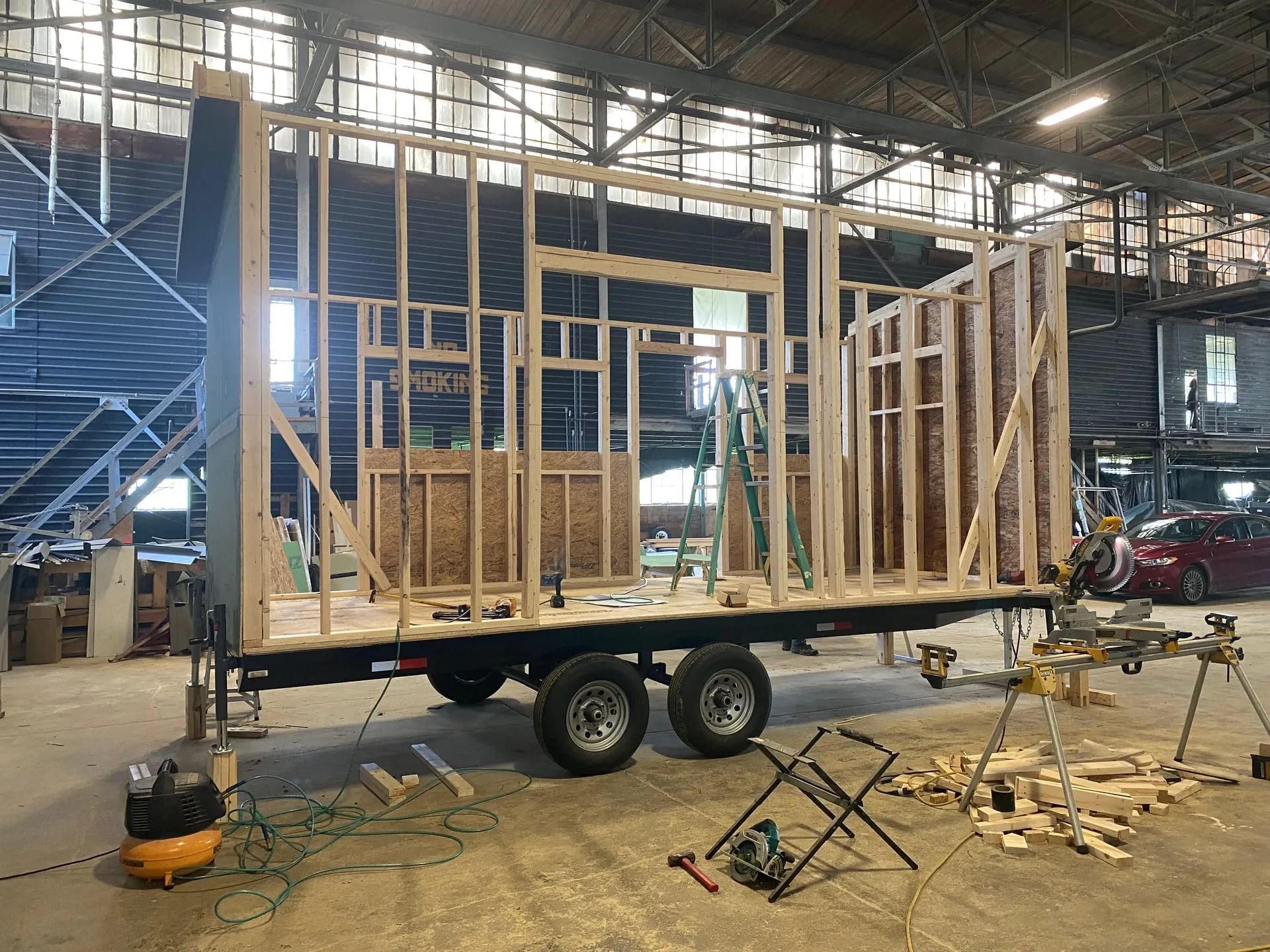
We finished a Camp Mini last week with the off-grid package. Twelve feet on a DOT trailer, cedar shingle exterior, painted interior. Buyer towed it home to their land in Aroostook County the day we handed them the keys.
One detail we’re proud of
The cedar shingle exterior. Our shop typically delivers these units with natural pine — faster to finish, cheaper, and easier to touch up in the field. Cedar shingle adds about three weeks of labor and materials, but the house ages into its site differently. On this unit we pre-weathered the shingles with a light grey oil before install so year one already looks like year five.
We’ll offer this as a standard option going forward. See the Camp Mini for current finish packages.
One thing we’d do differently
Routing the composting toilet vent. On the off-grid package, the toilet needs a dedicated vent stack that exits above the roofline. On this build we ran it along the exterior wall and through a soffit cap. It works, but the soffit cap is going to need re-sealing every two years in that climate.
Next build, we’re routing through the roof with a boot flashing. Simpler detail, better long-term.
What we learned about off-grid toilets
A few things that aren’t obvious until you’ve installed a handful of them:
- Airflow matters more than capacity. Undersized vent fans leave smells in the house. Oversized fans pull heat out of the cabin in winter.
- The urine diverter is where 80% of service calls come from. Dual-chamber units with a replaceable diverter beat single-chamber designs.
- Cold rooms slow the composting process to a crawl. Tell the owner up front: winter means emptying more often, not less.
Plumbing a house to fail gracefully matters more than plumbing it to run perfectly. Off-grid especially.
Next build
Another Camp Mini kicks off this week, then a Quickbuild 12 with the four-season upgrade. If there’s a detail from either worth writing up, we’ll put it here.